




Causal evidence of a line attractor encoding an affective state
Amit Vinograd, Aditya Nair, Joseph H. Kim, Scott W. Linderman & David J. Anderson
2024

We seek the minimal causal components that assemble into emotions and action
We use an integrative, multiscale approach to uncover the building blocks of brain states that underlie core affect and behavior. We combine deep-brain two-photon imaging and holographic optogenetic control with genetic and molecular profiling and computational modeling, linking cell identity, circuit dynamics, and behavior into causal explanations.
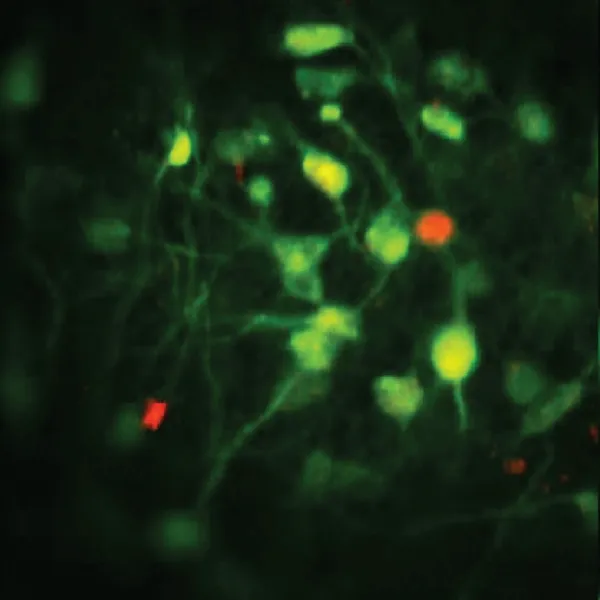
(record neural activity)
We use several methods to record neural activity, including 2P Calcium imaging, miniscope imaging, and electrophysiology

(behavior)
We measure different ethologically relevant behaviors that underlie affective states including aggression, mating and anxiety
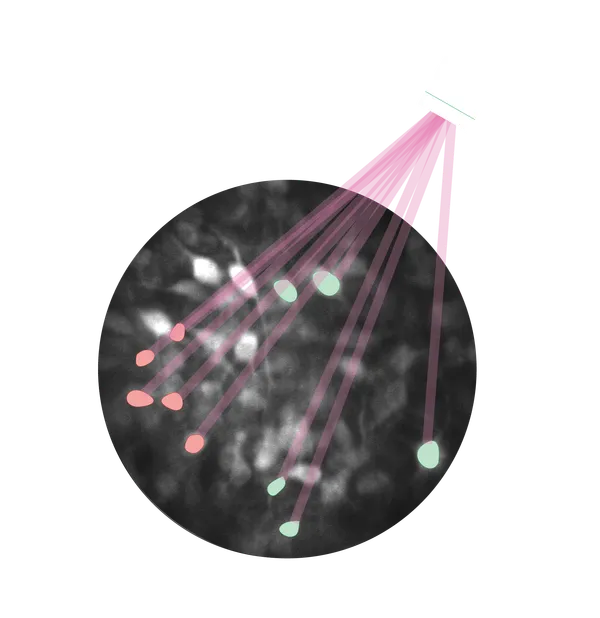
(perturb/manipulate)
We use advanced tools to activate and control neural activity at single cell resolution
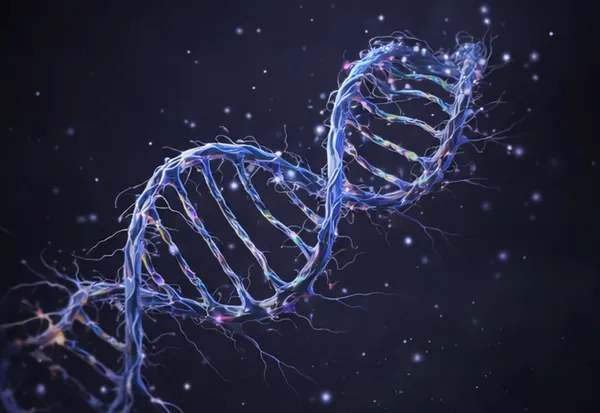
(molecular/genetic identity)
We map the genes and molecules that underlie and interact with neurons to guide affective states
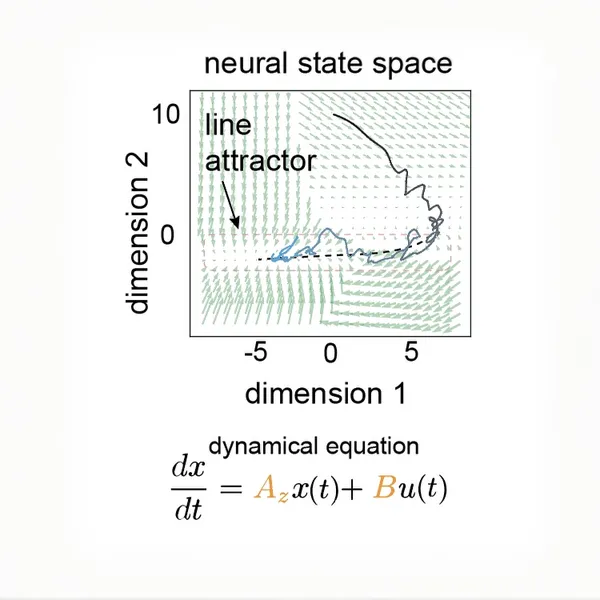
(mechanism to prediction)
We utilize computational modelling to understand and predict how neural activity generates affective states
“Without a question, there can be no scientific knowledge.”
Amit Vinograd, Aditya Nair, Joseph H. Kim, Scott W. Linderman & David J. Anderson
2024
This is an example post so you can see how News looks. Replace it with real lab news, such as Amit's grants.
30 Haim Levanon st., Ramat Aviv, Tel-Aviv 69978
Gray School of Medicine Room 519